
About
This study set out to understand the impact of a government-led Teacher Professional Development (TPD) programme on teaching and learning in Tanzania, and how well it supports equitable participation by all teachers. It represents embedded research with the Government of Tanzania on implementing and optimising TPD reform at national scale in a lower-middle-income country using digital technology. There is a recognised need for more effective, sustainable, and scalable models that leverage digital tools for TPD. This study aimed to address these evidence gaps through implementation research and participatory methods. EdTech Hub worked in partnership with Tanzania Institute for Education (TIE), Aga Khan University Institute for Educational Development (AKU-IED), and Aga Khan Foundation (AKF).
Key Findings
The study is ongoing, but key outcomes include:
- Impact on Learning Management System – issues with teachers accessing the system were identified, data analytics have been improved to enable detailed analysis, zero-rating of LMS by Vodacom has been achieved.
- Raising awareness of the needs of teachers with disabilities and chronic illnesses in relation to MEWAKA and Communities of Learning.
- Findings around teacher motivation stimulated discussions around how MEWAKA can link to broader system, e.g., career progression.
Beyond these initial results, the significance is more process-oriented and methodological, rather than pointing to specific TCPD practices that should be followed universally. Because the scale of engagement is already fundamentally linked to national implementation, its importance is inherent in the study.
Bridging the Gap
The Challenge
While teacher professional development (TPD) reforms can improve teaching and learning, there is limited evidence on how to implement and optimise them at national scale in low- and lower-middle-income countries using digital technology.
Questions remain around designing TPD interventions that are effective, sustainable, and scalable, and linking them to teachers’ classroom practice and learning outcomes. Government-led initiatives, such as Mafunzo Endelevu kwa Walimu Kazini (MEWAKA), or Teacher Continuous Professional Development (TCPD) in Tanzania, also need ways to embed research-driven learning cycles to support continuous improvement and strengthen the teaching workforce amid rising student enrolment and teacher shortages. This study aimed to address these gaps.
Why It Matters
This study represents embedded research with the Government of Tanzania on implementing and optimising TPD reform at national scale in a low- or lower-middle-income country using digital technology. There is a recognised need for more effective, sustainable, and scalable models that leverage digital tools for TPD while establishing clear links to learner outcomes.
How this Work is aiming to Address It
This study aims to address these evidence gaps through implementation research and participatory methods. EdTech Hub worked in partnership with Tanzania Institute for Education (TIE), Aga Khan University Institute for Educational Development (AKU-IED), and Aga Khan Foundation (AKF).
Objective
To understand the impact of a national-scale, government-led TPD reform programme (called MEWAKA) on teaching practices and student learning outcomes in Tanzania.
The Research Questions
- What are the benefits and shortfalls of the tech-supported, school-based TCPD model?
- How effective is the model in improving learning outcomes for learners in rural primary schools in Tanzania?
- How is the TCPD programme designed and adapted to diverse local needs, at each level of the TCPD system? How well does it support equitable participation of different teacher groups, especially female teachers, teachers with disabilities, and those with limited technology access?
- What are the success factors and challenges in reaching all teachers when implementing the programme at national scale?
Study Design and Methodology
The study comprises a design-based implementation research (DBIR) phase and a systemic mixed-methods research phase, including participatory research activities. Each of the different components of the research design addresses a different sample size, but fundamentally all feed into the national TCPD reform, which affects about 300,000 teachers and 15 million students.
Timeline of Activities
October 2021 – February 2022
Inception phase
Finalising research plans and design, securing ethical approval through COSTECH, and holding remote meetings with partners
March 2022
Design-Based Implementation Research (DBIR) Phase 1 baseline
Research conducted across eight schools in Tanzania’s Lindi region
September – December 2022
DBIR cycle 1
Implementation research conducted in four of the eight baseline schools
Implications for Policy and Practice
The study was only recently completed, so its full implications are not yet clear. However, being embedded with government stakeholders means several early learnings are already beginning to influence policy
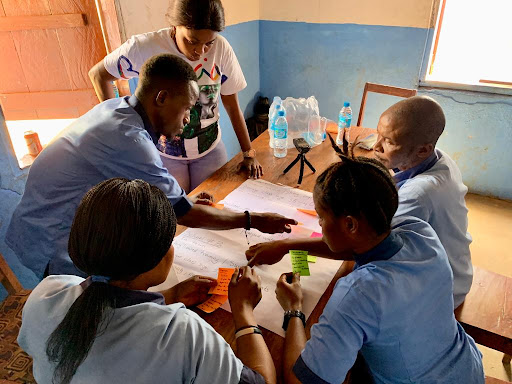
These include ongoing insights provided to the government through implementation science and policy dialogues. As the government is part of the research team and the DBIR methodology, we have conducted redesign workshops with stakeholders to present findings and recommendations, solicit input, prioritise actions, create a plan for operationalising some recommendations, and test others requiring further research and refinement. The mechanism for integrating continuous improvement into a complex national change management process in TCPD is now fully accepted. The government themselves are sharing the research findings widely. Outcomes from our work in primary schools concerning the LMS have informed the extension of the programme to secondary schools; one government member of our team reported “we just orient them so that they can be aware of what are the successes and where are the unexpected challenges and the ways of resolving them when they’re implementing it”.
Furthermore, the government has negotiated with one mobile phone company (Vodacom) to zero-rate the TCPD Community of Learning (CoL) materials on the LMS to overcome the barrier of data costs. Limited awareness of the materials on the LMS is also being addressed through a publicity drive and new guidance for head teachers about their responsibility for having CoL sessions in place. The government’s awareness of the needs of teachers with disabilities has risen, as noted also by informal in-school observations, and is informing development of new materials in their special needs unit. The Tanzania Teachers Union has approached the government with a demand for support for those teachers too, in response to members participating in our research; likewise school leaders and education officials insisted that the revised curriculum take the needs of teachers with disabilities into account, resulting in the government curriculum developers being sent to relevant centres to ensure this happened. Action is being taken on other research recommendations, including providing certificates for participation in MEWAKA and completion of courses, and exploring how to link this to teacher career development and promotion.
The Importance of the Results
Key outcomes include:
- Impact on Learning Management System – issues with teachers accessing the system were identified, data analytics have been improved to enable detailed analysis, zero-rating of LMS by Vodacom has been achieved.
- Raising awareness of the needs of teachers with disabilities and chronic illnesses in relation to MEWAKA and Communities of Learning.
- Findings around teacher motivation stimulated discussions around how MEWAKA can link to broader system, e.g., career progression.
Beyond these initial results, the significance is more process-oriented and methodological, rather than pointing to specific TCPD practices that should be followed universally. Because the scale of engagement is already fundamentally linked to national implementation, its importance is inherent in the study.
Research Instruments Pack
Discover our research instruments pack, featuring the tools created and used in this study.
These tools have undergone extensive piloting in both workshop and school settings, and are informed by best practices such as the World Bank’s TEACH classroom observation tool. All packs are available to download in English and Swahili.

Video Gallery

The voices behind the research: Dr. Taskeen Adam explains more about the study
Watch here
Lessons from tech-supported teacher professional development programmes in Tanzania and Bangladesh
Watch hereStudy Team
Study contacts
- Sara Hennessy, Co-Investigator
- Taskeen Adam, Co-Investigator
- Saalim Koomar, Qualitative Research Lead and Delivery Manager
- Kristeen Chachage, Co-Investigator
- Calvin Swai, Co-Investigator
- Maryam Aboud, Research Officer
- Hannah Simmons, Country Lead
- Johnpaul Barretto, Country Lead
Advisors
- Sonia Ilie, Advisor
- Nidhi Singal, Advisor
- Konstantina Maragkou, Advisor
- Jamie Proctor, Advisor
Tanzania Institute of Education
- Dr. Aneth Komba
- Dr. Fika Mwakabungu
- Jonathan Paskali
Aga Khan University
- Prof. Fredrick Mtenzi
- Dr. Winston Massam
Aga Khan Foundation
- Gervace Anthony
- Winifrida Jacob Mrope
- Mustafa Malibiche
- Emmanuel Mutura
- Vicky Mrosso
- Philbert Komba
- Innocent Rwambali
- Rupert Corbishley
- Mapunda Kawanga
Key Partners