
About
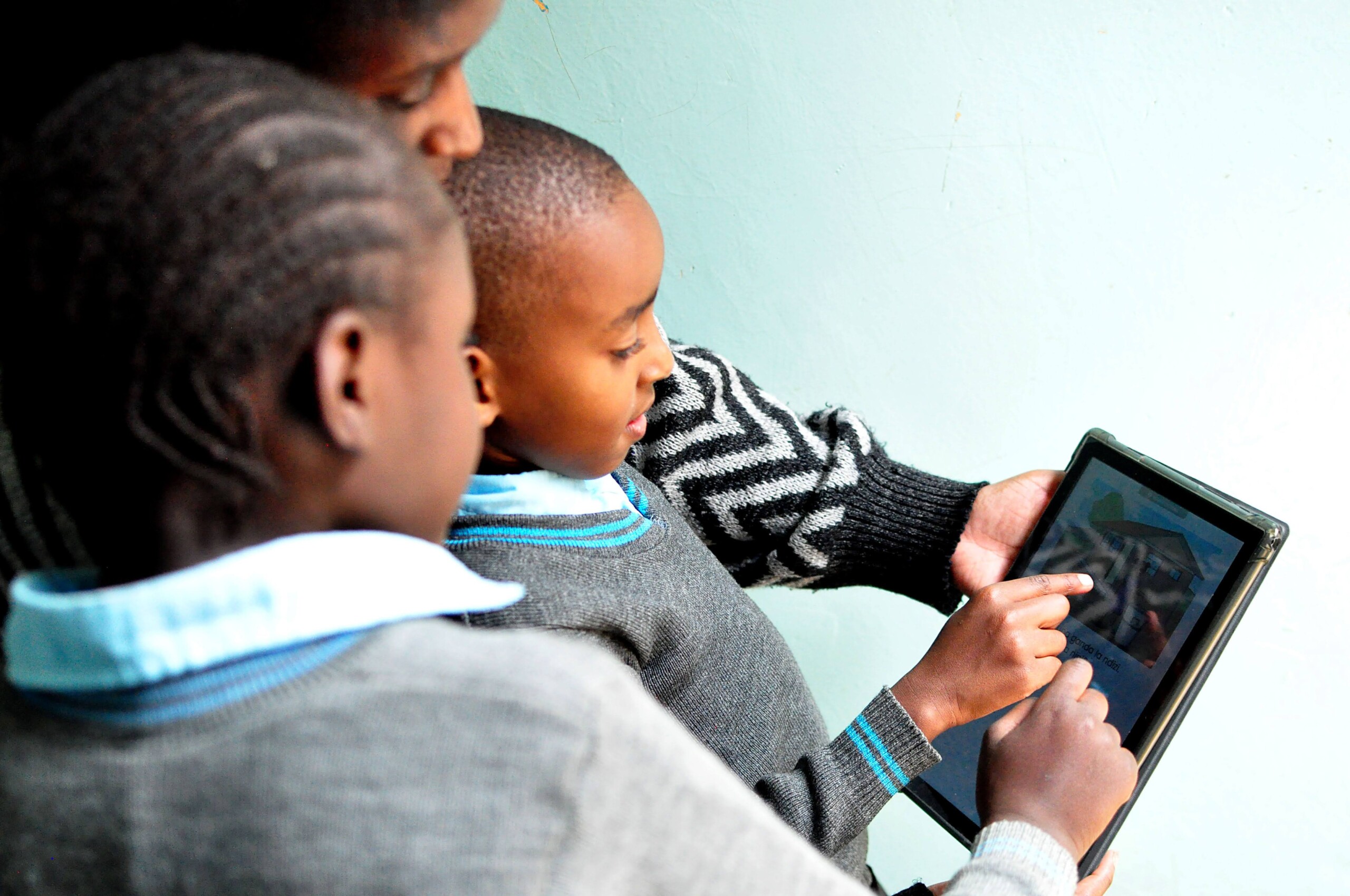
This research explores how technology can best be used to strengthen parental and caregiver engagement in children’s reading. Through this work on testing various modalities (training, nudges, feedback loops, incentives, and information campaigns) at different intensity levels, there is now evidence to determine how best to encourage parent/carer engagement with their child’s reading. This work focused on Worldreader’s BookSmart app, which has global reach but varies in uptake and engagement across contexts.
Key Findings
- Evidence was found that use of a digital reading tool can lead to significantly increased interest in reading by children, but in this case, the interventions — either as designed or as delivered — were not found to show progress on reading outcomes.
- Engaging with their children on a digital reading app made parents/carers more aware of children’s perceived reading ability and showed higher levels of comfort with their own digital literacy.
- An ‘orientation effect’ where the majority of impact was driven largely by introduction to the tool shows the potentially undervalued importance of this moment; with drop-off in app use countered by created moments incentivising engagement.
- With insights gathered through comparison of different modalities of parental engagement in digital reading, measurement of learning outcomes, and evaluation of cost-effectiveness, this study contributes to global knowledge on leveraging educational technology for literacy.
Bridging the Gap
The Challenge
Literacy is a pressing issue globally. In Kenya, where some 70% of children cannot read a simple text by age 10, a step change is needed. Evidence shows that parental engagement can significantly enhance student development. While new technologies offer potential support, their effectiveness is largely unknown. Decision-makers and implementers need trusted, neutral evidence to help understand contexts and considerations for enabling learning with supportive technology.
Why It Matters
In the face of ongoing literacy challenges, new technologies provide an avenue to strengthen reading engagement and outcomes, particularly for marginalised learners. By understanding the implications and outcomes of various approaches to strengthening reading attitudes and practices, effective engagement can lead to improved learning outcomes and deepen connections between caregivers and learners.
How this Work is Aiming to Address It
The ‘Raising Readers’ study aimed to investigate effective strategies for engaging parents with their children in using a digital reading platform and its impact on reading skills. The study addressed several evidence gaps in promoting reading in low-resource settings. It tested various modalities at different intensity levels to determine how best to encourage parent/carer engagement with their child’s reading.
A further gap it aimed to fill was understanding the impact of engaging with the Worldreader’s Booksmart app on both parents and children — the study explored the impact of using the app on parents’/carers’ knowledge, attitudes and practices, as well as children’s interest and abilities. By including carer-child dyads and incorporating children’s voices, often missing in parent-focused interventions, the study offered a more holistic view of the learning environment.
Additionally, interviews with teachers and school leaders were conducted to capture their observations, helping to understand the relationships and drivers between parents/carers, children, and teachers. This multi-stakeholder approach offered a comprehensive understanding of the dynamics involved in encouraging reading in low-resource contexts.
Objective
This research was designed to explore how technology can best be used to strengthen parental and caregiver engagement in children’s reading. We set out to co-design a distinct set of tools schools can use to facilitate greater parental engagement. These include training, nudges, feedback loops, incentives, and information campaigns. These findings will help provide evidence for EdTech tools to potentially improve uptake and engagement within different contexts.
The Research Questions
- How do different intervention modalities impact caregiver-child engagement in a reading application?
- What is the cost-effectiveness of each of these modalities for improving caregiver-child engagement?
- How do the different modalities impact caregiver-child engagement and reading outcomes across gender and socioeconomic backgrounds?
Study Design and Methodology
The ‘Raising Readers’ study addresses evidence gaps by evaluating various approaches to increase parent–child engagement in digital reading.
The study used Design-Based Implementation Research (DBIR) and mixed methods — including propensity score matching and thematic network analysis — to determine which inputs and intervention components most effectively support the use of a digital reading application. For this study, researchers focused on the use of Worldreader’s BookSmart app by Kenyan Grade 3 learners (aged 8) and examined the conditions that can strengthen parental and caregiver engagement in children’s reading. Five different inputs (nudge messaging, teacher-assigned reading, hybrid training, the full package, and shared reading sessions) were trialled across 12 primary schools with 1,027 learners, their parents/caregivers, and their teachers, and were compared with 355 students in a control group.
By comparing different strategies and their impact — or lack thereof — on learning outcomes, the study provides insights for optimising digital reading programmes in low- and middle-income countries (LMICs).
Timeline of Activities
Oct – Dec 2021
Inception phase
Jan – Mar 2022
Co-design phase (Pre-intervention)
Apr 2022 – Jan 2023
Baseline, implementation, and endline study (Intervention)
The Importance of the Results
Our work helped close critical evidence gaps and will continue to support decision-makers and researchers by identifying essential learnings on parental engagement in foundational literacy. Attitudinal change and engagement in voluntary reading are reported as having a positive change in this study. This is important within the global context of declining voluntary reading in children from the age of 9 due to over-emphasis on literacy testing and other environmental and cultural factors . Worldreader is now engaged in further research to assess the impact on reading gains.
Implications for Policy and Practice
The policy implications of this study are primarily around the important role of parental engagement for foundational literacy. This policy area sits in Kenya under the remit of the government’s Curriculum Centre, with which the study team has engaged to share and engage on findings and recommendations. Policies that can integrate home learning with schools, as well as equip parents to be active agents in their children’s early learning, particularly in literacy and in instilling a love of learning, are key policy priorities supported by the research’s findings.
I have noticed that the learners are so motivated because now unlike in the past they enjoy reading and even go to the library. Sometimes you find that there are so many in the library that I have to send some back to class. I feel that now they know the meaning of reading.”
— Teacher, OLN Primary School
Study Team
- Susan Nicolai, Principal Investigator (ODI Senior Research Associate)
- Amina Khan, Co-Investigator
- Asma Zubairi, Co-Investigator
Previous contributors to this study:
- Jay Thakrar
Key Partners