
Sandboxes work alongside the Hub’s other in-country support to change the way decisions are made about technology in education. Our aim is for decisions to be made based on both rigorous academic evidence and real-time evidence directly informing implementation.
The sandbox process is designed to help generate that real-time evidence. We draw on methodology like lean impact and user-centred design to get to learning as fast as possible to make interventions as robust as possible.
EdTech Hub has developed the Sandbox Handbook as a guide for implementers looking to test and scale EdTech interventions following this approach. This handbook doesn’t need to be followed to the letter. Instead, we hope it can inspire and guide you to take a more iterative and evidence-informed approach to implementation.
Did You Know?
Lean Impact is a way of testing new ideas quickly and learning fast to maximise social impact. In a Sandbox it means running small-scale experiments, gathering feedback and iterating often so solutions can be adapted to what actually works rather than relying on assumptions. Think of it as “learning by doing” to help make change smarter, faster and more effective.
Tools to Help You Kick-Start Your Sandbox
Experiment Types for EdTech
This tool provides a non-exhaustive list of ways to design and run experiments.
See toolMaster Framework: Behaviour Change Principles for EdTech
This tool aims to help you get started with ways to design for innovation behaviours or mindsets and make them stick.
Go to frameworkThe 6 Mindsets You’ll Need
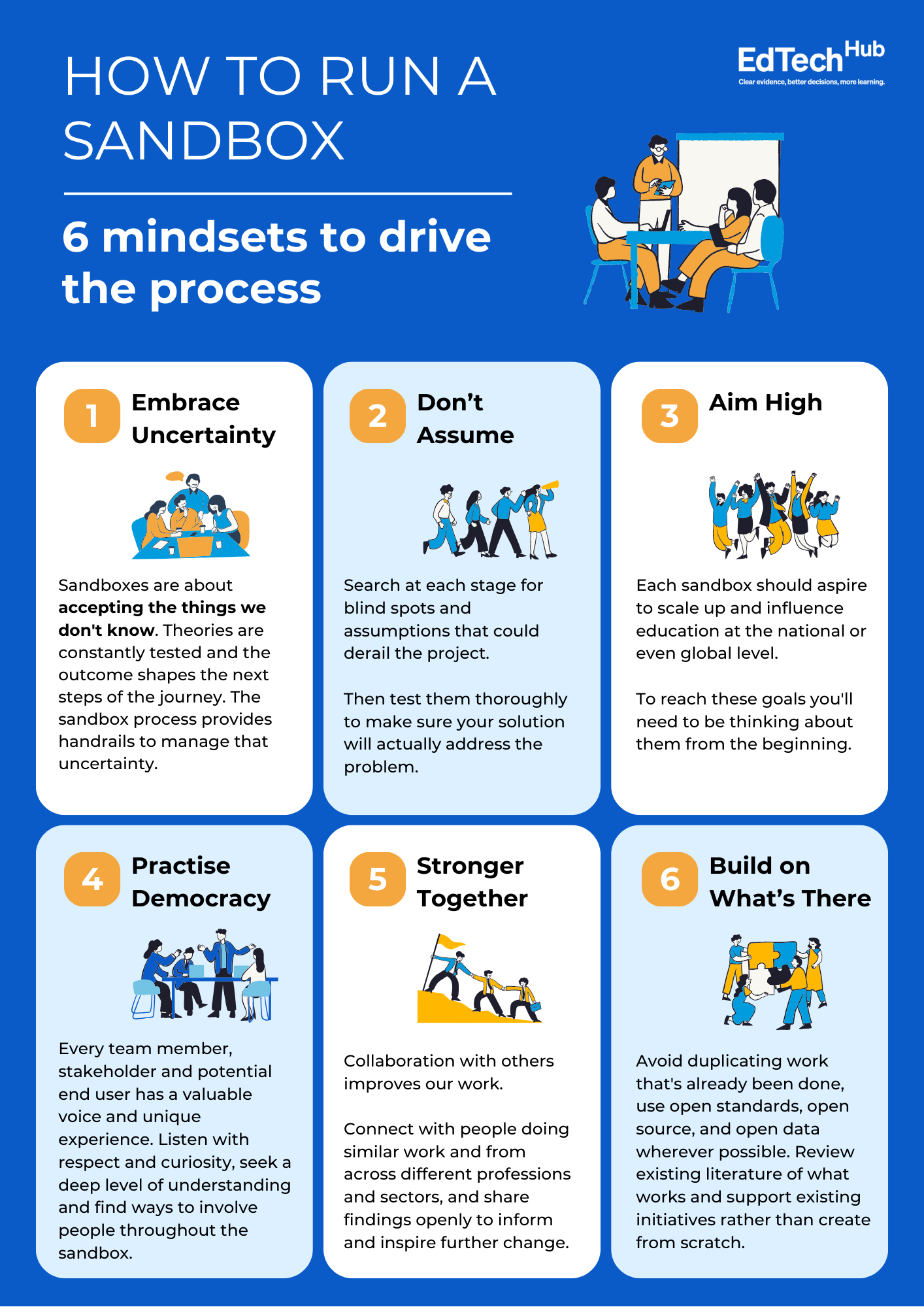
Alongside the methods, you’ll need the right mindset to conduct this kind of work. We have developed a poster with the Sandbox Community — a group of entrepreneurs and innovators who are currently running or have run a sandbox with the Hub.